
- Ask
- Counsel
May 27, 2026
#Engineering Entrance Exams NEET 2026 CAT 2026 IIT Admission Entrance Exams GATE Exam
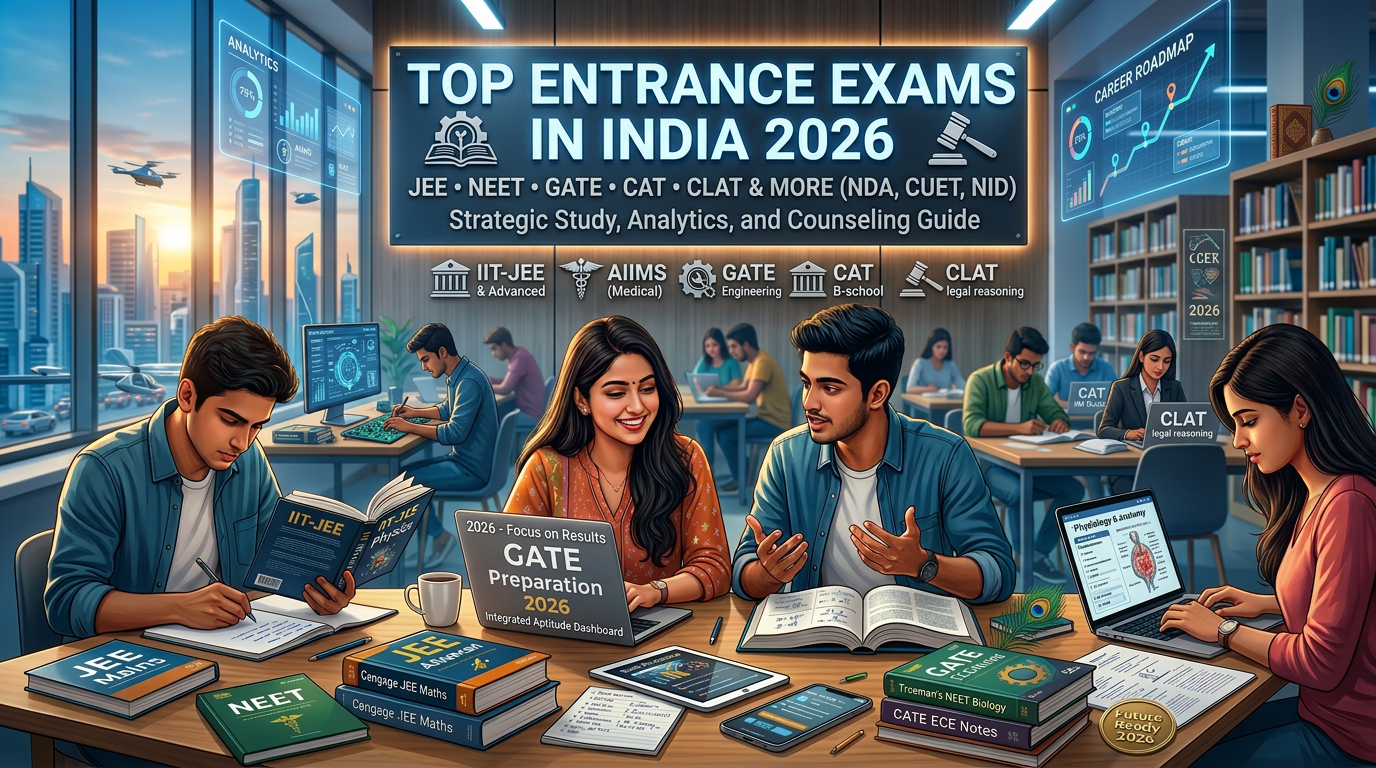
Cracking a top entrance exam is a major milestone for millions of Indian students. In 2026, these exams will remain the most trusted route to secure a seat at premier institutions like the IITs, AIIMS, and IIMs. Navigating this competitive landscape requires accurate information and a clear strategy.
Whether you are currently in school or a college graduate, this comprehensive guide maps out everything you need to plan your academic journey.
To understand the scale of these exams, let us look at the sheer numbers and competition intensity across India’s biggest testing landscapes:
JEE (Engineering – IITs/NITs): Around 1.2 to 1.4 million students register annually. With total IIT seats remaining around 17,000–18,000, the acceptance rate stands at a razor-thin 1–1.5%.
Overall, less than 5% of all appearing aspirants successfully qualify for India's absolute top-tier institutions. Driven by rising student participation against a limited pool of premium seats, the baseline competition intensity has surged by 20–30% over the last 5–7 years.
Entrance exams serve as a fair, merit-based system to distribute limited seats at top-tier colleges. The exam landscape has evolved significantly, shifting almost entirely toward computer-based testing, structured normalization processes, and enhanced security measures to ensure fair play.
Exams in India are broadly divided into specific professional pathways:
These tests are organized either at the national level by central authorities like the National Testing Agency (NTA) and select IITs, or at the state level by regional boards. Your performance determines your rank, which colleges use during centralized counselling rounds to allocate seats.
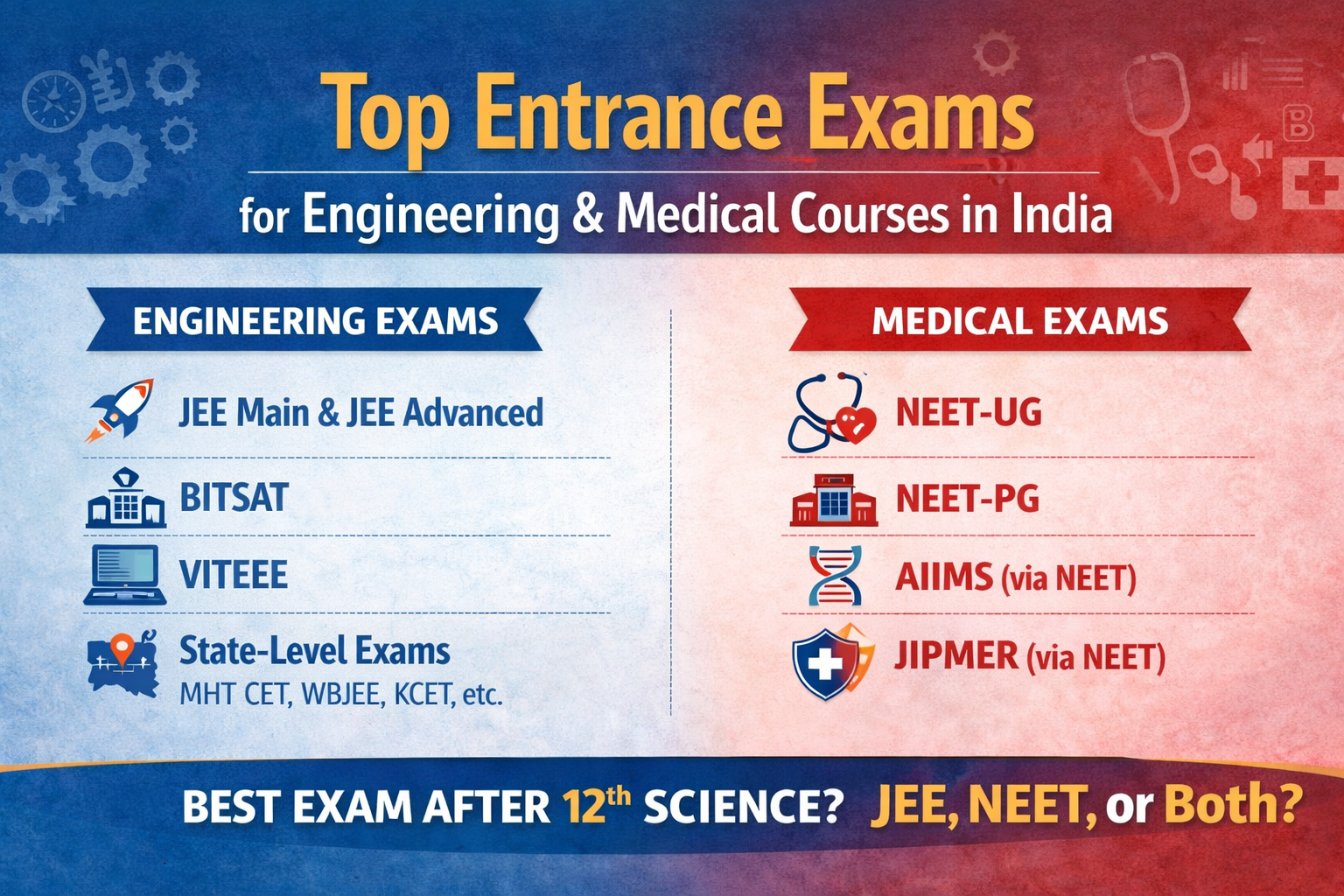
Managed by the NTA, JEE Main is the starting point for engineering aspirants, opening doors to National Institutes of Technology (NITs) and Indian Institutes of Information Technology (IIITs).
Only the top 2.5 lakh qualifiers of JEE Main get the chance to sit for JEE Advanced. Conducted by a rotating IIT, this exam features highly complex, multi-concept problems. Scoring well here is the exclusive path to gaining admission into an Indian Institute of Technology (IIT).
To maximize your options, it is wise to look beyond JEE:
NEET UG is the single, centralized gateway for undergraduate medical seats in India, covering MBBS, BDS, AYUSH, and veterinary courses.
NEET (Medical – AIIMS & MBBS): Roughly 2.3 to 2.6 million candidates appear each year, competing for about 108,000+ total MBBS seats. For elite central campuses like AIIMS, only 1,300–1,500 seats are available across the country, keeping the ultimate selection rate below 5%.
For MBBS graduates, NEET PG serves as the portal to MD and MS specialized degrees. Meanwhile, students interested in business right after school can look into JIPMAT, which opens doors to the 5-year Integrated Program in Management (IPM) at IIM Bodh Gaya and IIM Jammu.
The Graduate Aptitude Test in Engineering (GATE) is targeted at engineering graduates. It serves a dual purpose: securing a master's degree (M.Tech) at IITs or NITs, and landing high-paying technical jobs at Public Sector Undertakings (PSUs) like GAIL, NTPC, and IOCL.
For those aiming for careers in academia, the NET/JRF exam determines eligibility for lectureships and junior research fellowships. For non-engineering post-graduation, CUET PG centralizes admissions into central and participating universities across the country.
CAT (Management – IIMs): Approximately 3 to 3.5 lakh candidates sit for the exam annually. The final acceptance rate for the flagship MBA programs at elite IIMs is frequently less than 1%.
Securing a seat at a top business school requires clearing highly competitive aptitude tests:
Read Also: Top MBA Entrance Exams in India 2026: CAT, XAT, MAT, CMAT & Other Tests Explained
Many students overlook state-level exams like KCET (Karnataka), AP EAMCET, TS EAMCET, MHT-CET, and WBJEE. Targeting these is a smart backup strategy. They give you access to high-quality state government colleges where fees are generally lower, and local state quota benefits apply.
Success requires a structured approach. Follow this step-by-step method to build your target plan:
| Step | Action Item | Goal |
| 1 | Identify Stream | Choose between Engineering, Medical, Management, or Law. |
| 2 | Shortlist Exams | Pick 1 primary national exam and 2 backup state or private exams. |
| 3 | Map Timelines | Track registration dates to avoid calendar clashes. |
| 4 | Use Tools | Check rank predictors and previous year cutoffs to set target scores. |
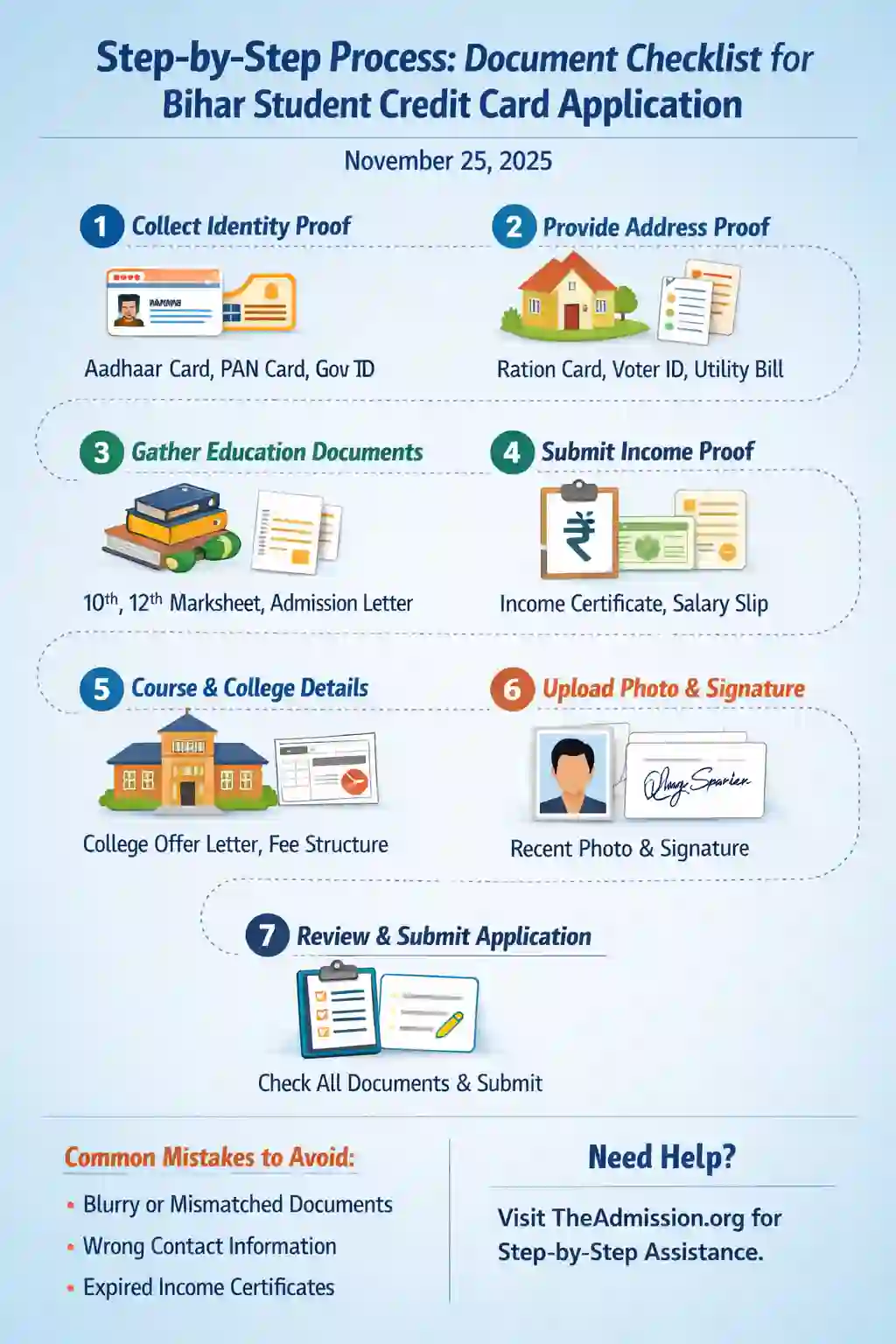
| 5 | Apply Smartly | Leverage common application systems to save time and effort. |
Navigating admissions does not have to be overwhelming. Students can use modern online tools to simplify their journey. College & Rank Predictors help estimate which campus you can get into based on your mock scores. Cutoff tools provide quick clarity on minimal targets.
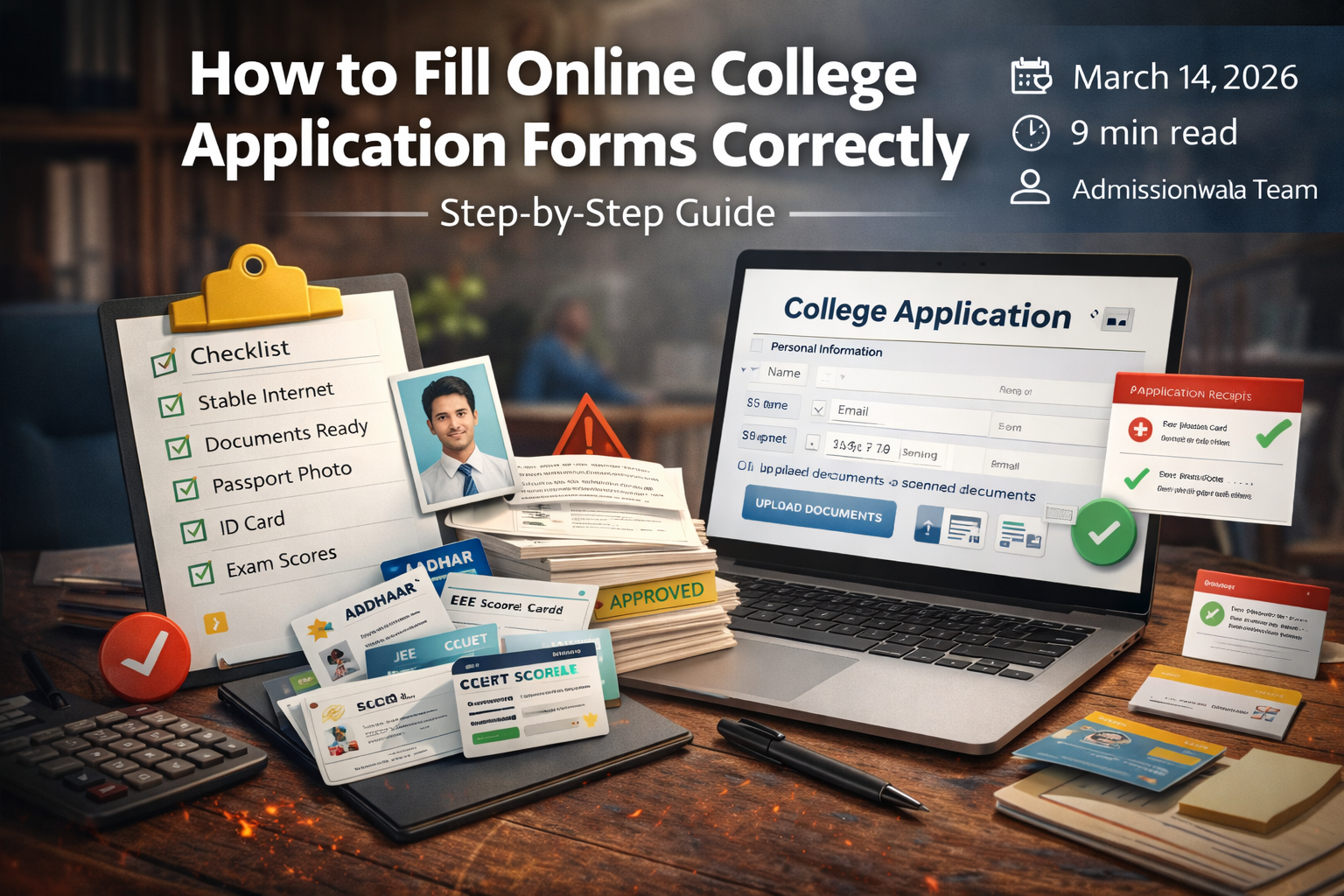
To avoid filling out dozens of individual forms, look for platforms offering a Common Application Form to apply to multiple colleges at once.
Every entrance exam in India has a specific purpose and offers a unique pathway to success. The key is early preparation, clear goal setting, and utilizing the right digital resources. Take charge of your career path today.
Explore top colleges, calculate your prospective ranks with advanced predictors, and get personalized help through free counselling services at AdmissionWalato secure your academic future!
JEE Advanced is generally considered tougher conceptually because it features complex, unpredictable problem-solving patterns in mathematics and physics. NEET requires an incredibly high level of speed, accuracy, and massive factual memory retention due to the high volume of candidates competing for limited seats.
Yes. If you choose Physics, Chemistry, Mathematics, and Biology (PCMB) in Class 12, you can register and appear for both exams.
The ideal time to start preparing is during the 3rd year of your B.Tech program. This gives you ample time to build your core engineering fundamentals before the final year exam.
It is safest to apply for 3 to 4 exams: your main national target, one or two reputable state-level exams, and a reliable private university backup.
Most national testing bodies do not extend regular deadlines. Keep an eye out for official extension notices with late fees, or pivot immediately to your backup exams that still have open registration windows.

16 Oct 2026 | 11:36 AM
12 Feb 2026 | 9:46 AM

13 Feb 2026 | 12:16 PM
14 Mar 2026 | 9:29 AM
13 May 2026 | 2:50 PM

2 Jun 2026 | 6:11 AM