- Ask
- Counsel
August 20, 2026
#Government Dental College in Maharashtra
# BDS Admission Maharashtra 2026
# BDS Colleges in Maharashtra
# Maharashtra NEET Counselling 2026
# Government BDS Colleges Maharashtra
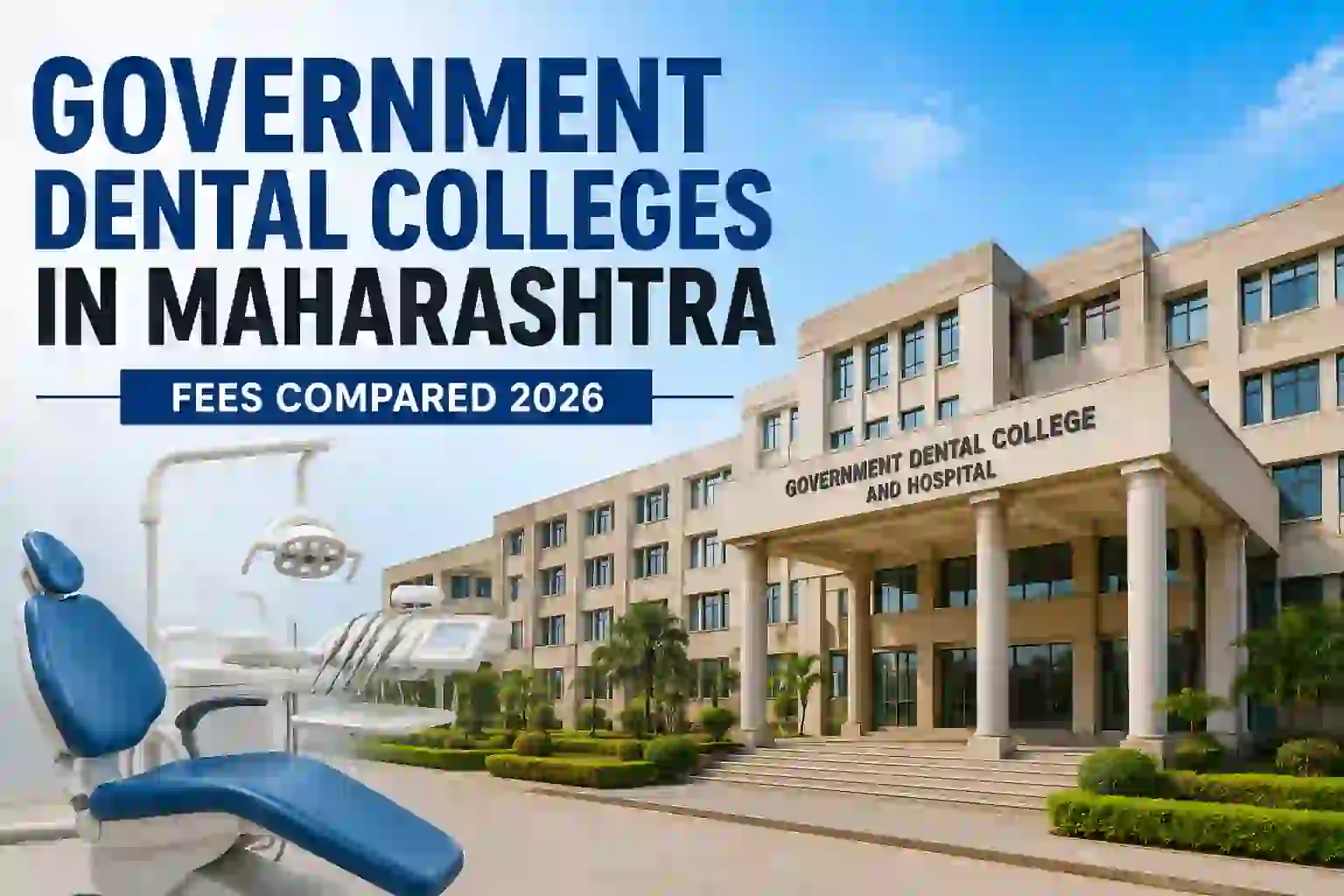
Government dental colleges in Maharashtra are the most expensive in India, with annual fees crossing ₹1.2 Lakh. If you compare the tuition and institutional charges of state-run Bachelor of Dental Surgery (BDS) colleges across the country, Maharashtra stands out with the highest baseline fee structure. While government institutions in states like West Bengal, Uttar Pradesh, Kerala, or Delhi offer seats for a modest annual fee ranging between ₹5,000 and ₹30,000, Maharashtra's state dental colleges officially charge over ₹1.20 Lakh to ₹1.30 Lakh per year for Open Category students. Yet, despite this steep price tag, competition for every single seat remains intense. Every year, thousands of top-ranking NEET aspirants fight fiercely for a spot in these institutions. The reason is simple: Maharashtra houses some of the oldest, most prestigious, and clinically advanced dental hospitals in Asia. Campuses like Government Dental College (GDC) Mumbai and Nair Hospital Dental College provide a daily influx of thousands of patients, giving young dental students unmatched hands-on surgical and diagnostic experience. If you are planning to secure admission to a government dental college in Maharashtra for the 2026 academic session, understanding the exact financial commitment and the admission roadmap is critical. In this comprehensive guide, we provide a transparent fee breakdown, analyze why these colleges charge higher fees, explain the state counselling process, and outline how you can maximize your chances of getting admitted. Maharashtra currently operates four state-run Government Dental Colleges (GDCs) and one premier municipal corporation-run institution (Nair Hospital Dental College) that participates directly in the centralized government seat allotment. Here is the complete, side-by-side annual fee comparison for Open Category candidates: Government Dental College & Hospital (GDC), Mumbai: Situated in South Mumbai near the historic Chhatrapati Shivaji Maharaj Terminus (CSMT), GDC Mumbai is the undisputed crown jewel of dental education in Western India. Offering 125 BDS seats, the hospital handles massive outpatient numbers daily. Students routinely perform complex restorative, surgical, and orthodontic procedures under the mentorship of top medical specialists. Nair Hospital Dental College, Mumbai: Managed by the Brihanmumbai Municipal Corporation (BMC), Nair Dental College is located at Mumbai Central. It is widely considered on par with GDC Mumbai. With 75 BDS seats, it offers cutting-edge oral and maxillofacial surgery wings and modernized diagnostic laboratories. Government Dental College & Hospital, Nagpur: Serving the Vidarbha region, GDC Nagpur is known for its academic rigor, well-maintained hostels, and steady clinical patient flow. A smaller cohort of 63 students ensures that every candidate receives dedicated clinical chair time. Government Dental College & Hospital, Aurangabad: Located in Chhatrapati Sambhajinagar, this institution provides outstanding training facilities for central Maharashtra. It features specialized dental chairs, fully equipped histopathology labs, and advanced prosthodontic departments. Government Dental College & Hospital, Jalgaon: Established as the newest addition to the state's government dental network, GDC Jalgaon provides modern campus buildings, digital X-ray infrastructure, and newly constructed hostel facilities, which accounts for its slightly higher initial fee schedule. (Note: The total annual fee includes the basic tuition fee of approximately ₹1,04,000, along with library fees, gymkhana charges, development funds, and refundable laboratory security deposits. Exact breakdowns may vary slightly based on final university notifications.) It is completely natural for parents and students to ask why a government dental college in maharashtra charges five to ten times more than government colleges in other states. The higher cost structure is driven by specific administrative, economic, and institutional policies: Unlike states where medical education relies entirely on direct treasury grants, Maharashtra's state medical and dental colleges operate on a semi-autonomous model. To keep pace with modern dental advancements—such as digital intraoral scanners, computerized tomography units, and specialized phantom head simulation labs—institutions must generate internal revenue rather than waiting for extended government budgetary cycles. A sizable portion of the annual fee receipt goes toward the institutional "Development Fund" (Vikas Nidhi). This dedicated revenue stream is directly controlled by the college administration to finance continuous campus expansion, purchase high-end dental consumables, maintain operational air filtration systems in surgical suites, and upgrade student hostel amenities. Operating large dental hospitals in major urban centers like Mumbai, Nagpur, and Aurangabad entails substantial municipal tariffs, utility expenses, waste management costs, and maintenance contracts. Because dental clinics require continuous water purification, specialized bio-waste disposal, and uninterrupted power grids, operational expenses per student are naturally higher than general arts or science faculties. The nominal ₹1.2 Lakh+ annual fee primarily affects Open Category students with high family income. The state government maintains an extensive fee concession and reimbursement program for domicile students from eligible backgrounds: SC and ST Category Students: Entitled to complete 100% tuition and development fee waivers through the social justice and tribal welfare departments. VJ/NT and OBC Category Students: Eligible for substantial fee concessions, paying only a fraction of the overall academic charges. EWS and EBC Candidates (Open Category): Through the Rajarshi Chhatrapati Shahu Maharaj Shikshan Shulkh Shishyavrutti Yojna, students from economically weaker backgrounds (annual family income below ₹8 Lakhs) receive a direct 50% waiver on basic tuition fees. Admission to government dental colleges in Maharashtra is conducted through a centralized, transparent system. While 15% of the total seats are allocated through the central All India Quota (AIQ) managed by the Medical Counselling Committee (MCC), the remaining 85% of seats fall strictly under the Maharashtra State Quota. The 85% State Quota counselling is organized and regulated exclusively by the State Common Entrance Test Cell (CET Cell), Maharashtra. You must appear for and achieve a qualifying percentile in the national NEET-UG examination. Direct admissions, management quotas, or sports concessions without a qualifying NEET score are strictly illegal in government dental colleges. Following the announcement of national results, the CET Cell launches its medical admission portal (cetcell.mahacet.org). Candidates must register using their NEET roll number, enter their academic records, and pay the non-refundable state processing fee online. During online registration, candidates must submit clear digital scans of their authentic certificates: NEET-UG Admit Card and Scorecard Class 10 and 12 Passing Certificates and Marksheets Maharashtra State Domicile Certificate: Mandatory for the 85% state quota, verifying permanent residency. Caste Certificate & Caste Validity Certificate: Essential for all reserved category applicants. A standard caste certificate alone is insufficient without the official Caste Validity Certificate issued by the Divisional Scrutiny Committee. Non-Creamy Layer (NCL) Certificate: Required for OBC, VJ/NT, and SBC categories, valid for the current financial year. Standard Medical Fitness Certificate signed by a registered practitioner. After document scrutiny, the CET Cell publishes the official State Merit List. This document indicates your exact rank among applicants within the state, which forms the sole basis for seat allotment in subsequent rounds. Candidates must submit their preferences for dental colleges in order of priority. Because the portal locks choices after the designated deadline, candidates must arrange their target institutions carefully to avoid missing out on preferred locations. When an allotment is made, the student must report to the allotted college with original documents and the requisite Demand Draft for the fee. Status Retention Form: If you are completely satisfied with your allotted seat and do not wish to participate in further upgrade rounds, you can sign and submit the Status Retention Form at the time of admission to secure your seat permanently. Navigating the stringent rules of the Maharashtra CET Cell, securing valid documentation, avoiding preference mistakes, and tracking allotment rounds can become overwhelming for both students and parents. A single documentation discrepancy or an improperly ordered choice list can lead to disqualification from state quota rounds. This is where the expert team at AdmissionWala provides essential support. From detailed NEET score evaluations and college prediction matrices to end-to-end guidance on Caste Validity verifications and strategic choice filling, AdmissionWala ensures your admission journey is seamless, error-free, and successful. Partner with our experienced educational counsellors today to secure your BDS seat with total confidence! While attending a government dental college in maharashtra requires a higher financial commitment than in other states, the quality of clinical training, surgical exposure, and institutional reputation make it a worthy investment. Graduating from prestigious institutions like GDC Mumbai, Nair Hospital Dental College, or GDC Nagpur establishes a powerful foundation for your future career, whether you pursue private practice, corporate dentistry, or post-graduate MDS specializations abroad. By staying informed about fee structures, organizing your domicile and category documents early, and managing your CET Cell counselling preferences strategically, you can secure your path to becoming a successful dental surgeon. 1. Can students from other states apply for government dental colleges in Maharashtra? Yes, non-domicile and other-state students can apply, but strictly through the 15% All India Quota (AIQ) managed by the Medical Counselling Committee (MCC). Non-domicile students are not eligible for the 85% State Quota seats administered by the Maharashtra CET Cell. 2. Are tuition fees the same for reserved category students in Maharashtra? No. Eligible reserved category students (SC, ST, VJ/NT, OBC) and EWS/EBC candidates with a valid family income certificate below ₹8 Lakhs receive substantial state tuition fee concessions or full reimbursements under official government scholarship schemes. 3. Is a Caste Validity Certificate mandatory for Maharashtra BDS admission? Yes, it is strictly mandatory. Candidates applying under reserved categories must present both a standard Caste Certificate and an official Caste Validity Certificate issued by the Maharashtra Scrutiny Committee at the time of physical document verification. 4. What is the main difference between GDC Mumbai and Nair Hospital Dental College? Both institutions are top-tier dental colleges located in Mumbai. GDC Mumbai is owned and financed directly by the State Government of Maharashtra, whereas Nair Hospital Dental College is managed by the Brihanmumbai Municipal Corporation (BMC). Both participate in the same centralized CET Cell allotment rounds and provide world-class clinical exposure. 5. How many total government BDS seats are available across Maharashtra? Currently, the five government and municipal dental colleges in Maharashtra offer a combined total of 376 BDS seats per academic year, distributed among GDC Mumbai (125), Nair Dental (75), GDC Nagpur (63), GDC Aurangabad (63), and GDC Jalgaon (50).Government Dental Colleges in Maharashtra: Fees Compared 2026
Fee Comparison: Government Dental Colleges in Maharashtra (2026)
Campus Breakdown and Clinical Strengths
Why Are Maharashtra Government Dental Colleges So Expensive?
1. Partial Self-Financing and Institutional Autonomy
2. Mandatory Development Funds (Vikas Nidhi)
3. High Urban Operating Costs
4. Robust State Scholarship and Fee Reimbursement Architecture
Maharashtra Domicile and CET Cell Dental Counselling Process
Step 1: NEET-UG Qualification
Step 2: Online Registration on the CET Cell Portal
Step 3: Document Upload and Scrutiny
Step 4: State Merit List (SML) Publication
Step 5: Web Choice Filling (Preference Entry)
Step 6: Seat Allotment and the Status Retention Process
Secure Your Medical Admission with AdmissionWala
Conclusion
Frequently Asked Questions (FAQs)
20 Aug 2026 | 2:41 PM
12 Feb 2026 | 9:46 AM

13 Feb 2026 | 12:16 PM

14 Mar 2026 | 9:29 AM
13 May 2026 | 2:50 PM

2 Jun 2026 | 6:11 AM