
- Ask
- Counsel

July 16, 2026
#JEE 2026 cutoff
# NEET 2026 cutoff
# JEE Main 2026
# NEET UG 2026
# expected cutoff 2026
# JEE rank vs marks
# NEET rank vs marks
# JEE college predictor
# NEET college predictor
# engineering admission 2026
# medical admission 2026
# NIT cutoff 2026
# AIIMS cutoff 2026
# government medical college cutoff
# JEE counselling 2026
# NEET counselling 2026
# JEE Main expected percentile
# NEET safe score 2026
# college predictor 2026
# admission guidance
# engineering colleges India
# medical colleges India
# JEE Main preparation
# NEET preparation
# admission trends 2026
# JEE and NEET cutoff analysis
# best engineering colleges
# MBBS admission 2026
# AdmissionWala
# expected JEE NEET cutoff trends
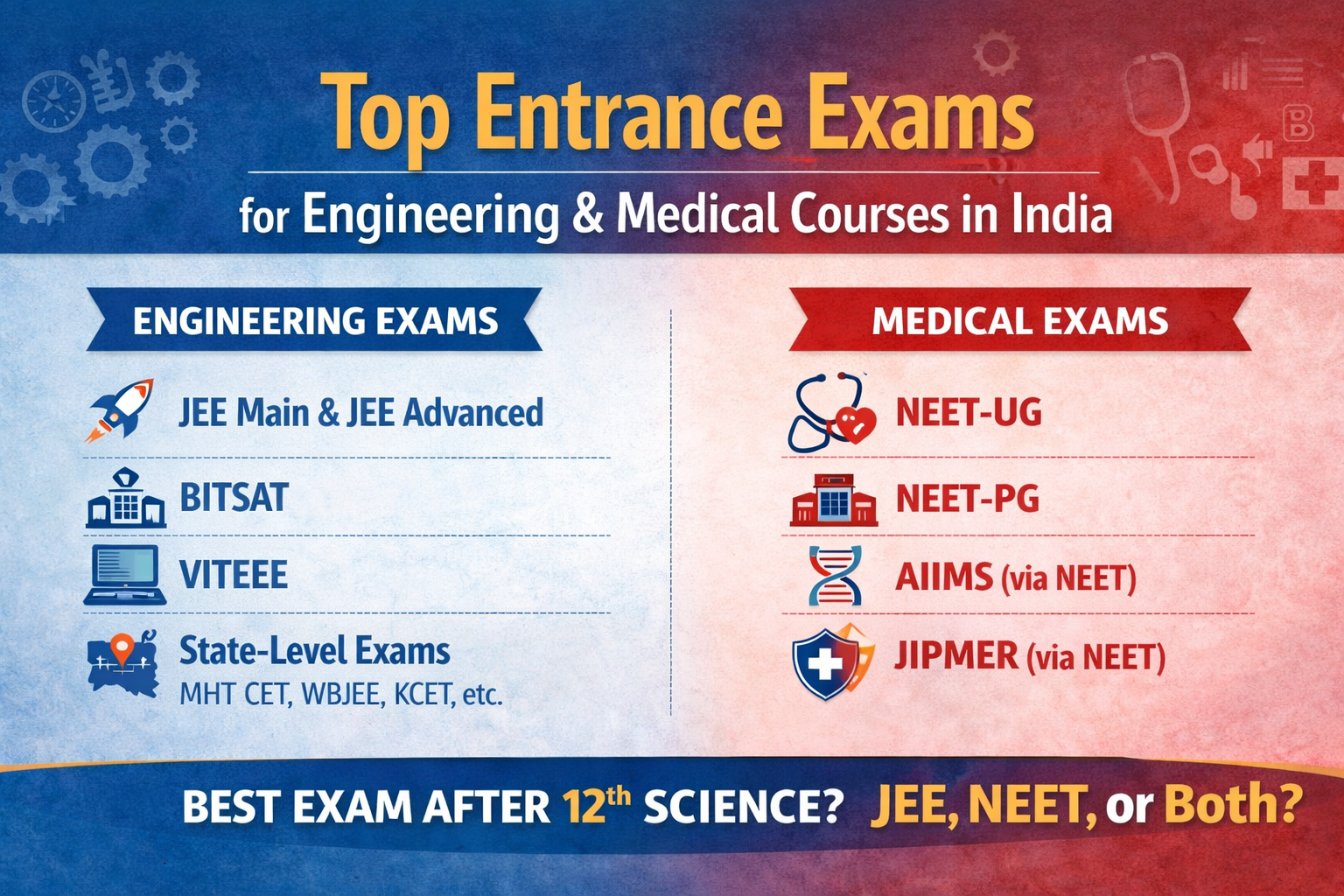
The tension in the air is real. Once the intense exam seasons for JEE Main and NEET UG come to a close, every student has only one big question on their mind: "What college can I get with my marks?" Understanding the relationship between your raw score, your rank, and the final college boundaries is the ultimate key to planning your next academic step. If you are trying to figure out your engineering or medical admissions, you have landed in the perfect place. Checking out the verified JEE cutoff 2026 and NEET cutoff 2026 trends will show you exactly how high the competition is this year. Most students make the mistake of looking at outdated counseling numbers, but the current scenario requires a much sharper look at how the seat allotment patterns are shifting. With expert support from AdmissionWala JEE Counselling and AdmissionWala NEET Counselling, let us dive deep into a very simple, comprehensive breakdown of the expected cutoff trends, mark-vs-rank distributions, and college matching strategies to help you lock in your dream seat. Before looking at the actual numbers, every student must understand that the National Testing Agency (NTA) and counseling authorities deal with two completely different types of cutoffs: Qualifying Cutoff: This is the bare minimum percentile or score you need just to pass the exam. Meeting this number means you are eligible to sit for the JEE Advanced paper or register for the medical counseling processes. However, simply qualifying does not guarantee a seat in any college. Admission Cutoff: This is the actual closing rank or score at which a specific branch in a specific college closes its doors for the year. This is the number that determines whether you get Computer Science at an NIT or an MBBS seat at a Government Medical College. The competition for engineering seats has become exceptionally tight this year. The total number of unique candidates appearing across the exam sessions has seen a significant jump, pushing the clearing boundaries higher than in previous seasons. Based on official testing statistics and early results evaluation, the official JEE cutoff 2026 qualifying percentiles required to sit for JEE Advanced are listed below: If your target is securing a top-tier branch in a premium institute, just clearing these percentiles is not enough. You need to aim for a much safer cushion to handle the JoSAA and CSAB seat allotment rounds comfortably. To understand which college is realistic for your profile, you need to map out the current rank vs marks patterns. Because different shifts carry varying difficulty levels, the exact marks needed to score a specific percentile fluctuate, but the overall country-wide rank distribution follows a highly structured pattern. Let us look at the approximate marks you need out of 300 to clear elite percentile brackets: 99.5+ Percentile (Marks: 230 – 250+): This is the elite zone. Scoring in this bracket gives you access to the absolute top 5 National Institutes of Technology (NITs), including NIT Trichy, NIT Surathkal, and MNNIT Allahabad, with highly demanded branches like Computer Science Engineering (CSE) and Electronics. 98.5 to 99.4 Percentile (Marks: 200 – 229): A highly secure zone where you can easily get core engineering branches in top-10 NITs or grab the coveted CSE seats in newly established Indian Institutes of Information Technology (IIITs). 97 to 98.4 Percentile (Marks: 175 – 199): In this space, you can secure core branches like Mechanical, Civil, or Electrical engineering in well-established NITs, or premium software branches in top Government Funded Technical Institutes (GFTIs). 95 to 96.9 Percentile (Marks: 150 – 174): This is the core clearing area for the General category. While top-tier branches at premium locations become difficult via the All India Quota, you have excellent chances through your Home State Quota or via specialized state engineering counseling processes. When it comes to the expected JEE cutoff for NITs 2026, the closing ranks vary heavily depending on your state reservation codes and the branch you select. However, analyzing the general trends across the past few counseling seasons gives us a very clear picture of what the closing doors look like for the popular Computer Science and core engineering branches: Computer Science (CSE): The open category All India closing ranks usually wrap up incredibly fast, closing between AIR 700 to AIR 3,500. Electronics & Communication (ECE): You can expect the seats to close anywhere between AIR 4,000 to AIR 9,000. Core Branches (Mechanical/Electrical): These branches typically remain open until AIR 12,000 to AIR 18,000. Computer Science (CSE): The closing ranks generally range from AIR 4,000 to AIR 12,000. Electronics & Communication (ECE): A very healthy option if your rank falls between AIR 11,000 to AIR 18,000. Core & Allied Branches: These seats regularly stretch up to AIR 25,000 to AIR 35,000 for open-category students. If your rank sits between AIR 40,000 to AIR 70,000, do not lose hope. The special CSAB rounds frequently offer spot vacancies in newer NITs and GFTIs for chemical, civil, production, or material sciences branches. Navigating these wide rank pools can become confusing, which is exactly why customized support from AdmissionWala JEE Counselling can change your entire admission trajectory. Expert counselors help you arrange your choice-filling preferences seamlessly so you do not miss out on a better college due to minor list errors. The story of the NEET cutoff 2026 is marked by an unprecedented surge in total applicants. Over the last couple of years, the density of students scoring high marks has transformed the medical admission landscape completely. Today, simply clearing the passing percentile threshold does not pave the path into a government hospital seat. The minimum qualifying percentile remains fixed by policy, but the underlying raw scores out of 720 fluctuate based on the national average performance: General / EWS Category (50th Percentile): The expected qualifying marks are projected to lie between 145 – 165 marks. OBC / SC / ST Category (40th Percentile): The expected qualifying scores will hover between 115 – 130 marks. If your dream is to walk into a Government Medical College (GMC) through the 15% All India Quota (AIQ) or the 85% State Quota, you must look at the actual competitive closing trends rather than the passing numbers: The Platinum Zone (680 – 720 Marks): Complete security. You are fully eligible to secure seats in premier national institutes like AIIMS New Delhi, AIIMS Bhubaneswar, JIPMER Puducherry, or MAMC Delhi. The Gold Zone (620 – 679 Marks): This range ensures a highly stable, guaranteed MBBS seat in top-tier state-run medical colleges located in regional capitals. The Silver Zone (590 – 619 Marks): This is the high-stakes border area. While securing a seat via the All India Quota can be tight depending on the final merit list, students with a strong state domicile stand a very healthy chance of landing a government MBBS seat through local state counseling. Below 580 Marks: For unreserved categories, entering a government MBBS track becomes difficult via general quotas. However, this score range opens up beautiful alternative pathways, including government dental seats (BDS), traditional medicine options (BAMS/BHMS), or seats in highly reputed private medical institutions. The intense competition means that even a difference of a single mark can shift your All India Rank (AIR) by hundreds of positions. Let us map out the projected rank vs marks scenario for NEET 2026 to help you read your position correctly: Because these margins are tight, managing your options during the choice-filling rounds requires extreme precision. Relying on professional insights from AdmissionWala NEET Counselling helps medical aspirants stay updated on newly added government seats, category-shifting choices, and loop rounds, preventing costly errors during seat registration. No cutoff list is completely set in stone. Every year, a few critical operational factors alter the final ranks dynamically: Total Number of Active Test Takers: The steadily expanding candidate pool naturally intensifies the competition for the top 1% of seats, pushing the required safe marks upwards. Difficulty Variations in Question Papers: If the physics, chemistry, or biology/mathematics blocks feature trickier, lengthier problems, the national raw average drops, which can ease the admission closing ranks slightly. Addition of New Seats & Institutes: When state governments introduce new medical facilities or increase the intake capacity within existing NITs/IIITs, it acts as a relief valve, absorbing more ranks and lowering the cutoff borders. State Domicile Policies: Since 85% of medical seats and 50% of NIT seats rely on state reservation systems, the performance density within your specific home state plays an immense role in your final allotment chances. To maximize your chances of turning your score into the best possible college call, follow this proven counseling preparation roadmap: Step 01 — Document Checklist Preparation: Gather your official admit cards, rank sheets, category certificates, domicile documents, and academic mark sheets early to ensure zero friction during verification rounds. Step 02 — Comprehensive College Mapping: Look beyond just the popular names. Build a thorough list of colleges that align with your exact rank bracket using a realistic rank vs marks approach. Step 03 — Domicile Advantage Analysis: Evaluate whether your home state quota offers a lower closing rank threshold compared to the competitive All India Quota rounds. Step 04 — Choice Preference Ordering: Structure your online option entry forms meticulously. Always place higher-dream choices at the top, followed by secure mid-tier realistic picks, and solid backup options at the bottom. Step 05 — Expert Guidance Consultation: Connect with professional advisory systems like AdmissionWala JEE Counselling and AdmissionWala NEET Counselling to decode deep analytical closing data, helping you avoid blind spots and secure the best possible academic future. Navigating the competitive landscape of engineering and medical entrance tests is undoubtedly challenging, but keeping a close watch on the projected JEE cutoff 2026 and NEET cutoff 2026 dynamics allows you to read the current rank vs marks variations correctly, evaluate the category wise cutoff limits, and replace confusion with a highly practical plan of action. Whether your goal is to find the perfect branch using the expected JEE cutoff for NITs 2026 data or to secure a coveted government medical seat, relying on professional guidance from AdmissionWala JEE Counselling and AdmissionWala NEET Counselling gives you a massive advantage during the online choice-filling stages, helping you avoid costly registration mistakes, outsmart the competition, and successfully lock in the seat you have worked so incredibly hard for! 1. What is the main difference between qualifying and admission cutoffs in JEE Main? The qualifying cutoff is the minimum percentile score set by the NTA just to verify if you are eligible to sit for the JEE Advanced paper. The admission cutoff is the actual final closing rank needed to secure a seat in a specific branch at an engineering institute like an NIT or IIIT. 2. What is a genuinely safe score to secure a government medical seat via the NEET cutoff 2026 trends? For a General category student looking for a secure government MBBS seat via the competitive All India Quota, an objective score of 610+ marks is considered the safest baseline target, while anything below 590 depends heavily on specific home state quota distributions. 3. How much impact does the category wise cutoff have on final college seat allotments? It plays a massive role. Reserved seats for OBC, EWS, SC, and ST categories follow separate, dedicated closing rank tracks that are often significantly lower than the general open seats, allowing students from diverse backgrounds to secure premium options at completely different rank brackets. 4. How can I use the rank vs marks charts to find my target colleges? By mapping your raw score to the current rank vs marks distribution trends, you can easily estimate your approximate All India Rank range, which can then be cross-referenced with the previous year's closing trends for engineering and medical colleges to identify your most realistic choices. 5. How do AdmissionWala JEE Counselling and AdmissionWala NEET Counselling platforms help borderline students? Borderline rank pools require highly strategic planning, and both AdmissionWala JEE Counselling and AdmissionWala NEET Counselling provide deep, data-driven insights into home state quotas, special spot rounds, and real-time seat vacancies, ensuring your choice list is arranged perfectly to clear your best possible seat allocation.Expected Cutoff Trends for JEE & NEET 2026: Which College Can You Get?
The Big Difference: Qualifying Cutoff vs. Admission Cutoff
JEE Main 2026: Expected Cutoff Trends & Percentiles
Deep Dive: JEE Main Rank vs Marks Analysis
What is the Expected JEE Cutoff for NITs 2026?
Top-Tier NITs (Trichy, Surathkal, Warangal, Rourkela)
Mid-Tier NITs (Calicut, Durgapur, Jamshedpur, Patna, Kurukshetra)
North-Eastern & Newer NITs (Agartala, Silchar, Nagaland, Mizoram)
NEET 2026: Expected Cutoff Trends & Safe Scores
Understanding the Category Wise Cutoff for NEET
The Real Picture: Safe Scores for a Government MBBS Seat
Mastering the NEET Rank vs Marks Dynamics
Crucial Variables That Alter the 2026 Cutoffs
Step-by-Step Strategic Roadmap for Allotment Success
Conclusion: Take the Right Step Towards Your Bright Future
Frequently Asked Questions (FAQs)

16 Oct 2026 | 11:36 AM

12 Feb 2026 | 9:46 AM

13 Feb 2026 | 12:16 PM

14 Mar 2026 | 9:29 AM

13 May 2026 | 2:50 PM

2 Jun 2026 | 6:11 AM