Best Entrance Exams After 12th Science: Career & College Guide
The day Class 12 board results drop, a quiet panic settles in over millions of Indian households. Relatives call to ask about board percentages, but during college admission, a different question is asked: What was your entrance exam score?
High marks on a school report card look wonderful framed on a wall, but they no longer guarantee you a desk in a premier college. Today, the real key to unlocking top engineering institutes, medical colleges, and central universities lies in standardized competitive tests.
If you are trying to cut through the noise and figure out your next move, understanding the landscape of entrance exams after 12th science is your absolute first step. In this simple, transparent guide, we will break down the country’s biggest tests—including JEE, NEET, CUET, and key state-level exams—so you can decide exactly which entrance exam is best after 12th science for your specific career path.
Why Entrance Exams Dictate Your College Admission
In India, over 15 lakh students pass their 12th board exams in the science stream every single year. However, the number of seats across top-tier national institutions is limited. Relying purely on board exam percentages creates a major problem because different education boards evaluate students differently. A 90% score in one state board might require a completely different level of effort compared to a 90% in CBSE or ICSE.
National competitive tests level the playing field. Here is why these exams carry so much weight:
- Standardized Benchmarking: Every student answers the same paper under identical conditions, removing board-wise grading biases.
- Gateway to Premier Institutions: Institutions like IITs, NITs, AIIMS, and Central Universities do not offer direct board-based admissions for core professional degrees; they strictly require competitive ranks.
- Direct Industry Value: Companies that visit campuses for recruitment prioritize colleges that filter their intake through tough entrance tests, leading to higher starting salaries.
- Merit Scholarships: Strong entrance ranks frequently unlock government waivers and institutional scholarships, significantly lowering total tuition costs.
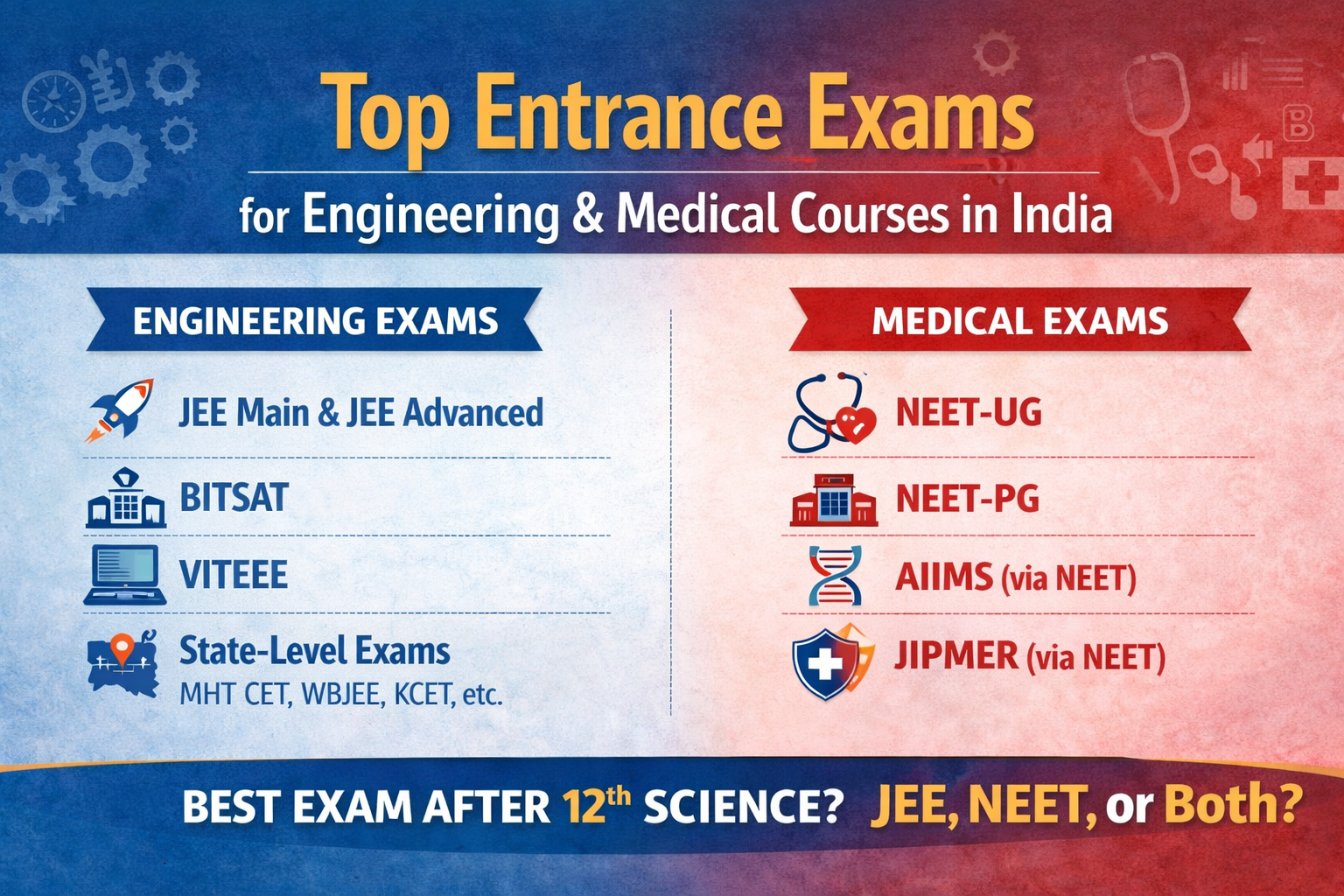
Top Entrance Exams for Engineering (PCM Stream)
If your 12th-grade combination includes Physics, Chemistry, and Mathematics, engineering remains one of the most flexible and rewarding career choices. Here are the primary tests you should keep on your radar.
A. JEE Main (Joint Entrance Examination - Main)
Conducted by the National Testing Agency (NTA), JEE Main is the largest engineering entrance exam in India.
- Target Colleges: 31 NITs, 26 IIITs, and dozens of Centrally Funded Technical Institutes (CFTIs).
- Format: Computer-Based Test (CBT) assessing Physics, Chemistry, and Mathematics from Class 11 and 12 syllabi.
- Marking Scheme: +4 for every correct answer, -1 for every incorrect attempt.
- Attempts: Held in two sessions annually, giving students a built-in opportunity to improve their score.
B. JEE Advanced
Passing JEE Main gets you into NITs, but it also serves as the screening round for JEE Advanced.
- Target Colleges: The 23 Indian Institutes of Technology (IITs).
- Eligibility: Only the top 2.5 lakh rank-holders from JEE Main are eligible to sit for this test.
- Format: Known for its unpredictable pattern and deep emphasis on conceptual application, multiple-correct options, and numerical problem-solving.
C. BITSAT (Birla Institute of Technology and Science Admission Test)
- Target Colleges: BITS Pilani, BITS Goa, and BITS Hyderabad campuses.
- Key Feature: Along with Physics, Chemistry, and Math, BITSAT includes dedicated sections for English Proficiency and Logical Reasoning. Speed and accuracy are critical here.
D. State-Level & Private University Exams
If you prefer staying closer to home or want solid backup options alongside national exams, consider these:
- State CETs: MHT CET (Maharashtra), WBJEE (West Bengal), and KCET (Karnataka).
- Private Universities: VITEEE (VIT Vellore), SRMJEEE (SRM University), and COMEDK (Karnataka private engineering colleges).
Top Entrance Exams for Medical & Healthcare (PCB Stream)
For students with Physics, Chemistry, and Biology, the medical and allied healthcare sector offers high professional respect and job stability.
A. NEET UG (National Eligibility cum Entrance Test - Undergraduate)
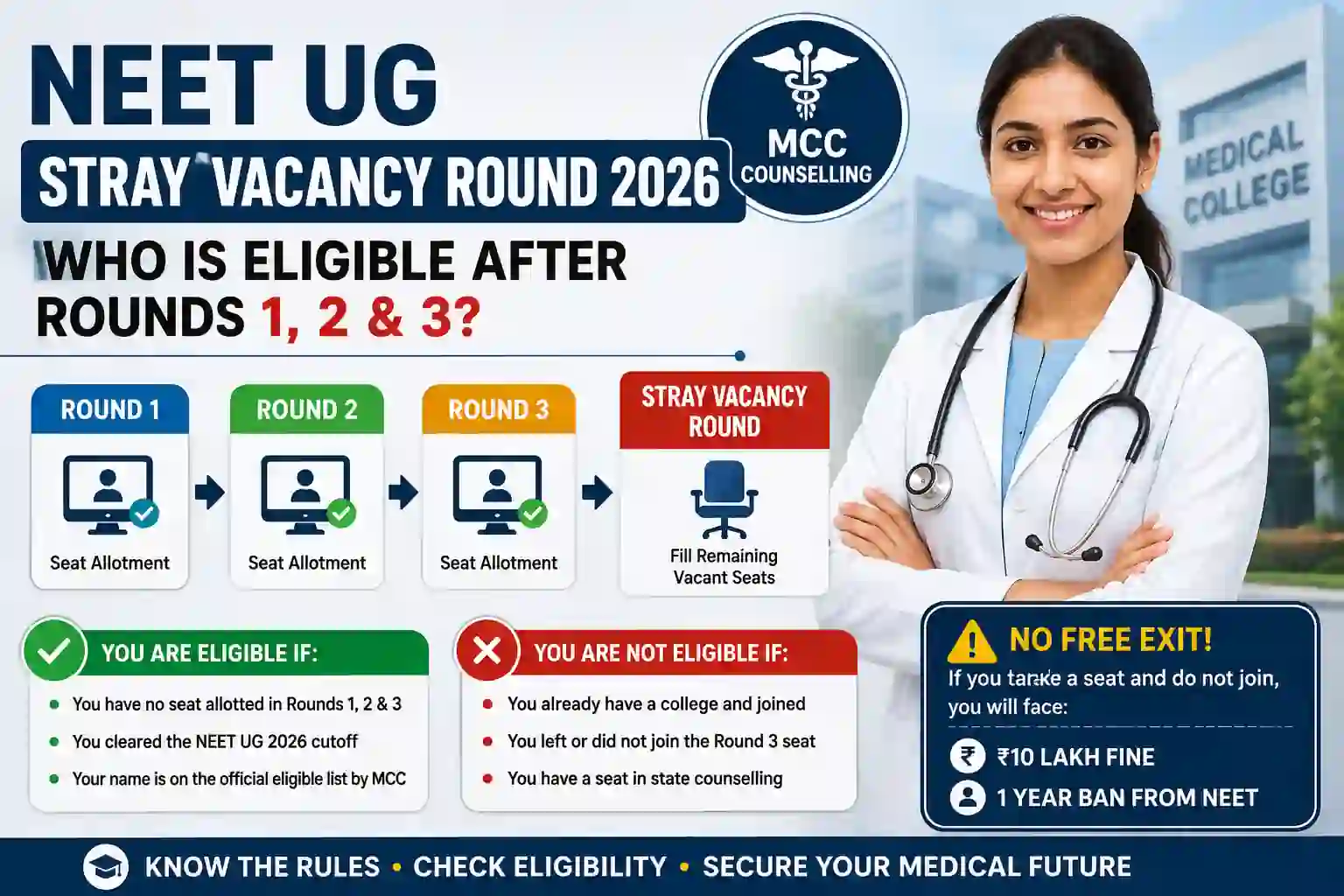
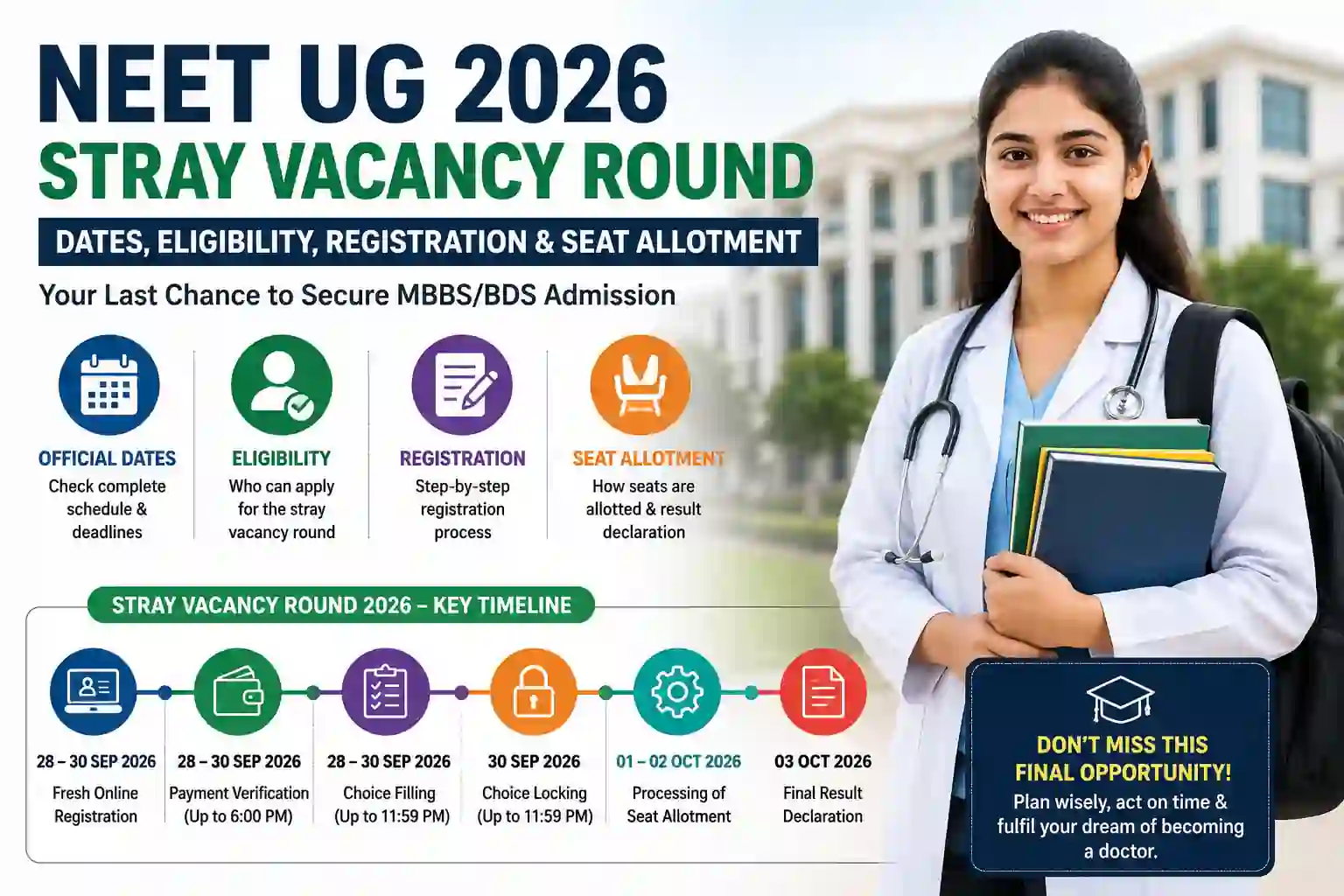
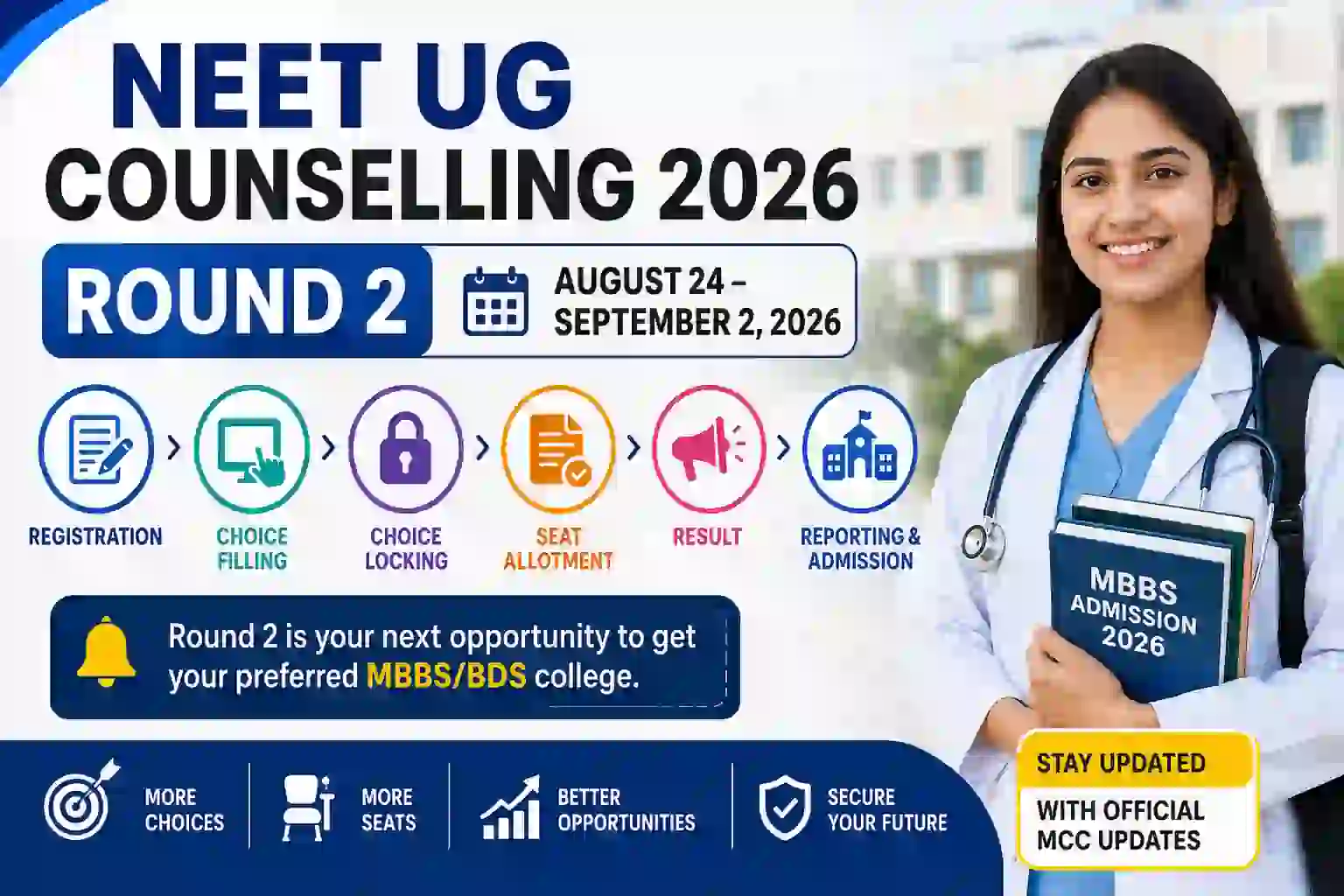
NEET UG is the single, unified entrance exam for undergraduate medical education across the entire country.
- Target Courses: MBBS, BDS, BAMS (Ayurveda), BHMS (Homeopathy), BUMS (Unani), and BSMS (Siddha). It is also used for B.Sc. Nursing and Veterinary seats in many states.
- Target Colleges: All government and private medical colleges in India, including AIIMS and JIPMER.
- Format: Pen-and-Paper (OMR sheet) test consisting of 720 total marks. Biology holds 50% of the overall weightage (360 marks), making it the most critical subject to master.
- Marking Scheme: +4 for correct responses, -1 for wrong responses.
B. Paramedical, Pharmacy, and Allied Health Tests
- B.Sc. Nursing: AIIMS conducts its own dedicated B.Sc. Nursing Entrance Examination. Various state health universities also run independent entrance tests.
- Pharmacy (B.Pharm): State-level engineering/pharmacy entrance exams (like MHT CET, WBJEE, or KCET) or direct merit-based counseling are used for undergraduate pharmacy admissions.
Top Exams for Pure Science, Research, Arts, and Defence
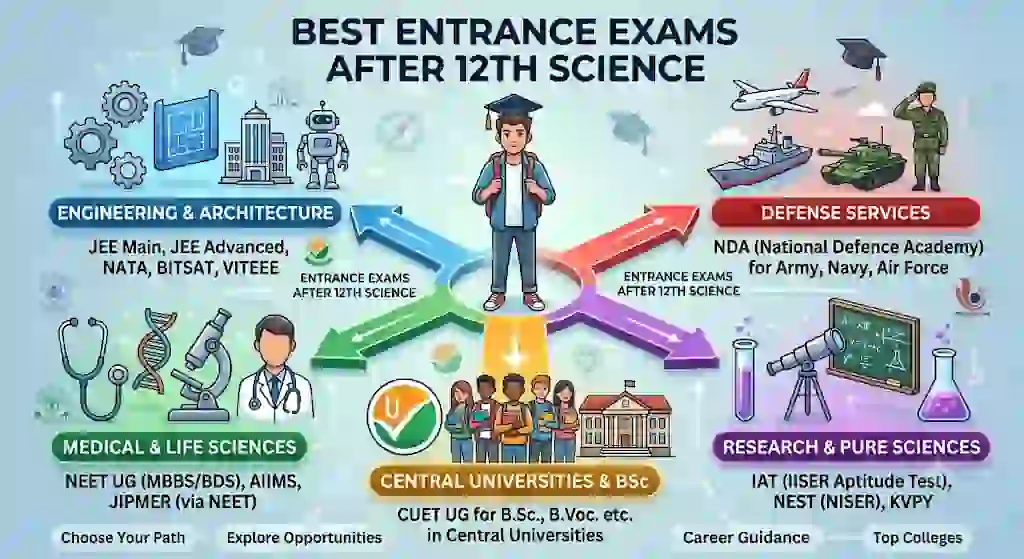
Engineering and medicine are not the only lucrative paths after 12th science. If you are interested in pure research, central university degrees, or serving in the armed forces, these exams are crucial:
A. CUET UG (Common University Entrance Test)
CUET UG has completely transformed undergraduate admissions for non-engineering and non-medical degrees in India.
- Target Colleges: Over 45 Central Universities (including Delhi University, BHU, and Jamia Millia Islamia) along with dozens of state and private universities.
- Target Courses: B.Sc. Honours (Physics, Chemistry, Maths, Biotechnology), B.A., B.Com, and integrated dual-degree programs.
- Structure: Allows students to choose specific domain subjects based on their 12th-grade syllabus, along with a General Test and Language paper.
B. IISER Aptitude Test (IAT) & NEST
- IAT: Gateway to the 7 Indian Institutes of Science Education and Research (IISERs) and IISc Bangalore for 5-year BS-MS dual degree programs focused on pure science research.
- NEST: Entrance exam for NISER Bhubaneswar and UM-DAE CEBS Mumbai, ideal for students aiming for careers in atomic research and fundamental sciences.
C. Defence & Architecture
- NDA & NA Exam: Conducted twice a year by UPSC for entry into the Army, Navy, and Air Force wings of the National Defence Academy. Includes a written exam followed by the SSB interview.
- NATA: The standard national test for students aiming to join 5-year B.Arch (Architecture) degree programs.
Which Entrance Exam is Best After 12th Science?
There is no single "best" exam for every student. The right choice depends entirely on your core subject stream, personal strengths, and long-term career vision.
Use this quick mapping guide to narrow down your focus:
Subject Stream | Primary Goal | Best Entrance Exam Focus |
PCM (Maths) | Top Engineering & Tech | JEE Main + JEE Advanced (Backup: BITSAT, State CETs) |
PCB (Biology) | Medical & Dental Degrees | NEET UG (Backup: State Paramedical / Nursing Tests) |
PCM / PCB | Central University Degrees (B.Sc) | CUET UG |
PCM / PCB | Scientific Research & Innovation | IAT (IISER) / NEST |
PCM | Architecture | NATA or JEE Main Paper 2 |
PCM | Armed Forces Officer | NDA & NA Examination |
Practical Strategies to Prepare for Competitive Tests
Preparing for national-level entrance tests requires a structured execution plan rather than endless hours of unfocused reading.
- Prioritize NCERT Fundamentals: For both JEE Main and NEET UG, over 80% of conceptual questions trace directly back to NCERT textbooks. Master every chapter text, diagram, and end-of-chapter exercise before moving to heavy reference books.
- Master the Art of Negative Marking Management: Standardized tests penalize blind guessing. If you cannot narrow down an MCQ to at least two logical choices, it is mathematically safer to leave it unattempted.
- Build Exam Stamina via Mock Tests: Sitting in one place for 3 hours and maintaining high mental accuracy under time pressure is a physical and cognitive skill. Take full-length, timed mock tests weekly during your final preparation months.
- Analyze Your Error Logs: Simply checking your mock test score is not enough. Maintain an error notebook to record whether a mistake was due to a conceptual gap, a calculation error, or a misread question.
Navigating College Admissions with Expert Support
Cracking the entrance exam is only the first half of the process. Once your scorecard arrives, navigating the seat allocation system can get overwhelming. Counseling bodies run multiple online rounds involving state quotas, all-India quotas, category reservations, seat lock deadlines, and complex fee structures.
A single misstep during form filling or choice locking can result in missing out on a superior college branch—even with a commendable entrance rank.
This is where professional AdmissionWala Guidance becomes invaluable. Their team of experienced admission strategists analyzes your specific rank, category, and budget to build an optimized college choice list. By guiding you through every step of official state and national counseling processes, AdmissionWala Guidance eliminates administrative guesswork, protects you from misleading claims, and ensures you secure the best possible college seat earned by your hard work.
Conclusion
Navigating entrance exams after 12th science does not have to be a source of constant anxiety. Whether you are aiming for JEE, NEET, CUET, or state-level engineering and medical seats, success comes down to clear goal setting, steady consistency, and knowing how the admission system works. Identify the exam that aligns with your true interests, focus on mastering your fundamentals, and lean on trusted counseling resources like AdmissionWala Guidance when it comes time to lock in your college choice.
Frequently Asked Questions (FAQs)
- Can PCMB students appear for both JEE Main and NEET UG?
Yes. Students who opted for Physics, Chemistry, Maths, and Biology (PCMB) in 12th grade are eligible to sit for both JEE Main and NEET UG. However, because both exams require deep preparation, most experts recommend choosing one as your primary target and treating the other as a secondary backup.
- Is CUET UG mandatory for admission into private universities?
No, CUET UG is primarily mandatory for Central Universities. However, hundreds of private, deemed, and state universities across India now accept CUET scores for direct undergraduate admissions alongside their own entrance criteria.
- What is the difference between JEE Main and JEE Advanced?
JEE Main is the preliminary exam conducted by NTA for admission to NITs, IIITs, and CFTIs. JEE Advanced is the second-tier exam conducted by one of the IITs, open only to the top 2.5 lakh rankers of JEE Main, and is the sole entrance path into the IITs.
- Are AIIMS medical seats filled through NEET UG?
Yes. Independent entrance exams for AIIMS and JIPMER were officially discontinued. All undergraduate MBBS seats across all AIIMS institutes in India are now filled strictly through NEET UG rank counseling.
- How many attempts are allowed for the NEET exam?
Currently, there is no upper limit on the number of attempts for NEET UG, nor is there a maximum age cap, making it accessible for candidates as long as they meet the basic eligibility criteria.