
- Ask
- Counsel
August 26, 2026
With nearly 25 lakh students aggressively competing for just over 1 lakh total medical seats across India, more than 95% of hardworking students will simply not get a government college seat. It is a harsh reality, not a personal failure. If your NEET scorecard shows an average passing mark, sitting at home and taking another highly stressful drop year is not your only option.
If your family has the required financial budget, you can legally and safely secure a guaranteed seat in a premium private medical college through the Management Quota MBBS. You do not have to give up your lifelong dream of wearing a white doctor's coat just because you missed a high cutoff.
In this highly simple, detailed, and completely fluff-free guide, we will clear all your confusion. We will explain exactly what this quota is, break down the real fee structures, discuss the strict eligibility rules for direct MBBS admission 2026, and show you how to safely navigate this massive process without falling into the dangerous traps of fake admission agents.
To truly understand this system, you first need to understand how private medical colleges and Deemed Universities actually operate in India. Unlike fully government-funded colleges, private medical institutions require massive amounts of money to build world-class hospital buildings, buy highly advanced medical machines, and pay monthly salaries to top-level doctors and professors.
To help these private colleges survive and grow their infrastructure, the National Medical Commission (NMC) and state governments allow them to reserve a specific percentage of their total seats (usually between 15% to 50%, depending on the specific state). These reserved seats are officially offered at a much higher tuition fee. This special category of seats is officially called the Management Quota MBBS.
You must understand that this is not a secret or illegal "backdoor" entry. It is a 100% transparent, legal, and officially government-recognized admission process. The students who graduate through these seats get the same MBBS degree, attend the same classes, treat the same hospital patients, and sit for the same final university exams as the students who took admission through the regular general merit quota. The only difference is the amount of tuition fee paid at the very beginning.
Many people hear the word "direct" and wrongly assume that anybody with enough money in their bank account can simply walk into a medical college and buy a seat. This is a very dangerous myth. The rules for direct MBBS admission 2026 are incredibly strict, and the central government monitors every single admission extremely closely.
If you want to apply for a seat under this quota, you must strictly fulfill these golden rules:
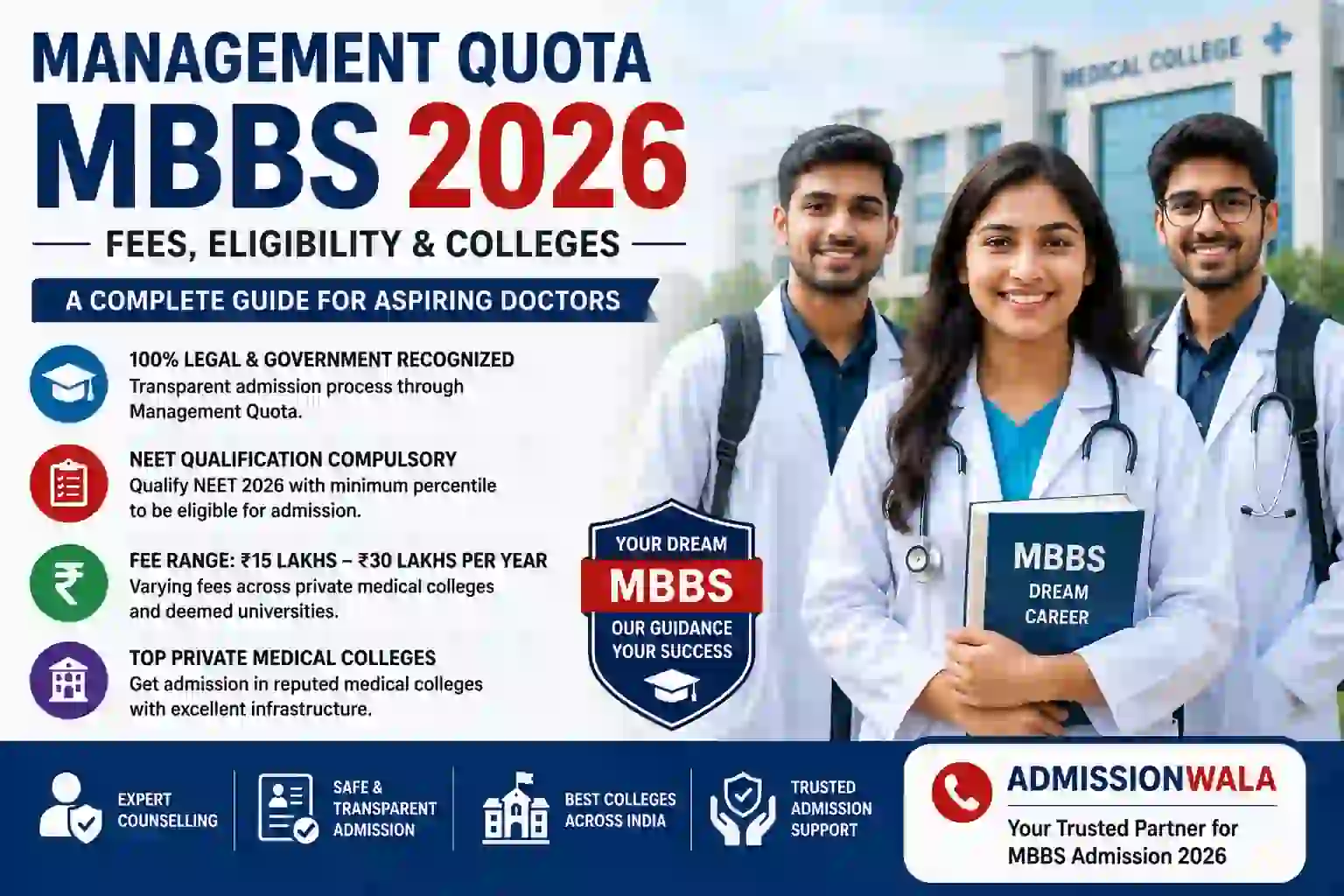
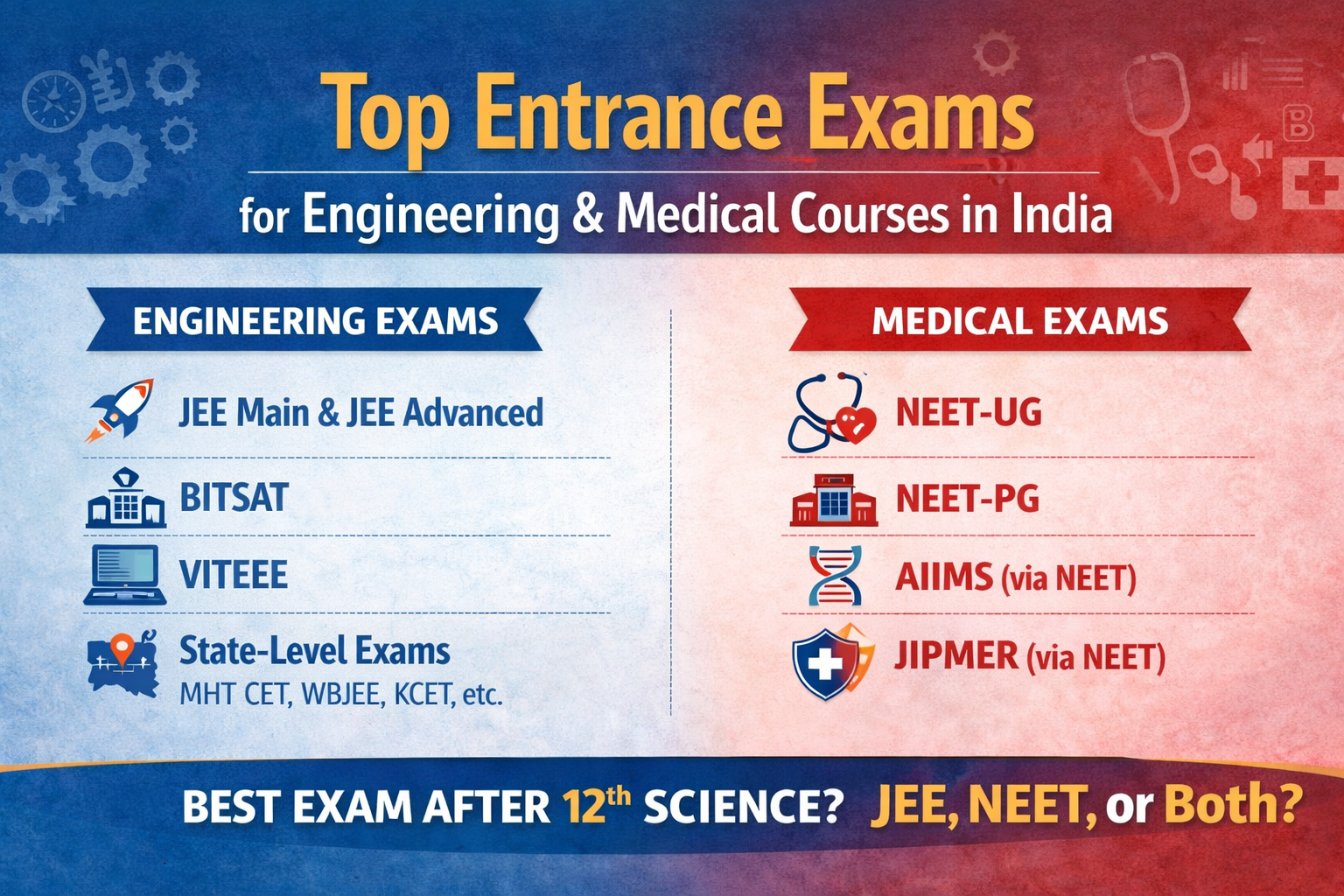
NEET Qualification is 100% Compulsory: You absolutely cannot become a doctor in India without passing the NEET exam. Even for the most expensive management seat in the country, you must score the minimum qualifying percentile. For general category students, this is usually the 50th percentile (which translates to roughly 135 to 164 marks, depending on the year's exact cutoff). For reserved categories (OBC/SC/ST), it is the 40th percentile. If you fail to qualify for NEET, all doors for MBBS in India are permanently closed for that year.
Age Limit: The student must be at least 17 years old by the 31st of December of the admission year (2026).
Class 12 Board Marks: You must have passed your Class 12 (10+2) board examinations with Physics, Chemistry, and Biology (PCB) as your main subjects. You also need to score a minimum of 50% aggregate marks in these three core subjects if you belong to the general category, and 40% if you belong to a recognized reserved category.
When parents sit down to plan for Management Quota MBBS, the absolute biggest question on their minds is always about the final financial budget. Because these seats do not receive any government subsidies, the private colleges charge a higher tuition fee to cover their massive daily running costs.
It is very important to have a completely clear financial plan before you start applying. Here is a highly realistic breakdown of what you can expect:
The Tuition Fee Range: The annual tuition fee for these specific seats generally starts from ₹15 Lakhs per year and can go all the way up to ₹30 Lakhs per year. Since the official MBBS course is 4.5 years long (plus 1 year of clinical internship), you have to multiply this annual fee by 4.5 to find your total tuition cost.
Deemed Universities: Top-tier Deemed Universities in states like Karnataka, Maharashtra, and Tamil Nadu usually charge between ₹18 Lakhs to ₹25 Lakhs per year. These colleges offer incredible hospital setups and highly experienced teaching staff.
State Private Colleges: Some private colleges in states like Uttar Pradesh, Bihar, and Rajasthan offer slightly lower packages, often ranging between ₹12 Lakhs to ₹16 Lakhs per year for management seats.
Additional Hidden Costs: Always remember that the tuition fee is not your only expense. You must also securely budget for hostel fees, mess (food) charges, library fees, uniform costs, and refundable security deposits. These extra charges usually add another ₹1.5 Lakhs to ₹3 Lakhs to your annual budget.
While the fees are definitely high, many smart parents deeply prefer this safe route over sending their 18-year-old children to unsafe foreign countries like Russia or China for medical education. Studying in India means there are zero language barriers, no extreme weather problems, and the student gets direct clinical practice with local Indian patients. This makes clearing the final NEXT (National Exit Test) licensing exam much easier.
Many parents get highly confused between these two terms. It is important to know the exact difference. The Management Quota MBBS seats are meant strictly for Indian citizens residing in India. The fees for these seats are paid in standard Indian Rupees (INR). On the other hand, the NRI (Non-Resident Indian) Quota is strictly reserved for students who live abroad or who have a blood relative (like parents or siblings) acting as an NRI sponsor. NRI seats are significantly more expensive than management seats, and the tuition fee must be paid in foreign currency (usually US Dollars). If you live entirely in India, you will be targeting the standard management quota.
You cannot simply walk into a college principal's office with a chequebook and buy a seat. The entire direct MBBS admission 2026 process is completely online and centralized by the government to completely prevent corruption. Here is how the process actually works:
Online Registration: After your official NEET scorecard is released, you must register on the official Medical Counselling Committee (MCC) website for Deemed Universities, or on the respective State Counselling websites for state private colleges.
Paying the Security Deposit: To participate in the counselling for these premium seats, you must pay a heavy online security deposit. For Deemed Universities, this is usually a massive ₹2,00,000.
Choice Filling: You will log into the portal and carefully create a preference list of all the medical colleges you wish to join.
Seat Allotment: The automated computer system matches your exact NEET score with the available management seats and allots you a college based strictly on your rank and your submitted choices.
Physical Reporting: Once allotted, you must download your allotment letter, pack all your original educational documents, and physically travel to the medical college to pay the first year's tuition fee and secure your seat.
If you are planning to utilize this quota, you should strongly look at states that have a very high number of established, high-quality private medical colleges.
Karnataka: Known universally as the educational hub of India, Karnataka has some of the absolute finest private medical colleges in the country. They offer excellent, massive hospital infrastructure and incredibly high daily patient flow.
Maharashtra: With cities like Pune, Mumbai, and Wardha hosting top Deemed Universities, Maharashtra is highly preferred by students looking for highly modern campus facilities and safe, clean environments.
Uttar Pradesh: UP has the highest number of private medical colleges in North India. It is completely an "open state," meaning students from any part of India (including Bihar, Delhi, or Haryana) can freely apply for its private medical seats without needing a local domicile certificate.
Because large amounts of money are involved in Management Quota MBBS, the market is totally flooded with fake agents, scammers, and frauds who desperately want to steal your hard-earned money. You must be extremely careful and completely avoid these highly common traps:
The "No NEET Required" Scam: If an agent calls you and promises that they can easily get you an MBBS seat even if you failed NEET or did not even write the exam, block their phone number immediately. It is physically and legally impossible. You will lose your money and face serious police action.
The "Backdated Admission" Scam: Some scammers promise to secretly backdate your admission after the official counselling deadlines are totally over. This is totally fake. Once the Supreme Court cutoff date passes, not a single seat can be added to any college in India.
The "Cash Donation" Trap: Never hand over massive bags of raw cash to fake agents claiming they will "bribe" the college management. All legitimate fee payments for Deemed and private colleges must be done through official bank demand drafts (DD) or RTGS directly into the official, verified college bank account.
Navigating the incredibly complex web of state counselling portals, tracking completely different security deposit deadlines, and verifying the real, hidden fee structures of 200 different private colleges is totally exhausting. A single spelling mistake on the portal or a missed payment deadline can instantly cost you your dream seat and your massive security deposit.
You absolutely do not have to fight this high-stress battle alone. To ensure your family's money is 100% safe and your child gets the best possible medical college, you strictly need the highly trusted experts at AdmissionWala Direct MBBS Admission.
We are a premium, completely verified, and highly experienced educational guidance firm. We stand as a solid, unbreakable wall between you and the fake scammers. Here is exactly how our expert team guarantees your ultimate success:
Honest Budget Planning: We provide you with the exact, hidden-cost-free fee structures of every medical college in India so you know exactly what you will pay for the next 4.5 years.
Customized College Selection: We analyze your exact NEET score and your family's exact financial budget to create a highly optimized, high-probability college choice list.
Complete Documentation Support: We perfectly manage your online registrations, massive security deposits, and document verification across multiple state portals so you never miss a golden opportunity.
100% Legal and Safe: We only guide you through the official, government-approved counselling pathways. Your money always goes directly to the college, ensuring absolute financial safety.
A slightly low NEET score is not a permanent failure; it is just a small speed bump on the long highway of life. The Indian medical system provides a fantastic, legally secure opportunity for highly passionate students to achieve their dreams through the Management Quota MBBS. By properly understanding the strict eligibility rules, preparing a completely clear financial budget, and actively avoiding fake agents, you can completely secure your medical future without wasting another year in endless stress.
Stop listening to confusing WhatsApp rumors and start taking clear, highly organized action today. Protect your hard-earned money and secure your child's prestigious white coat with total confidence. Contact the highly dedicated experts at AdmissionWala Direct MBBS Admission today, and let us successfully guide you into the perfect medical college!
1. Is Management Quota MBBS completely legal in India?
Yes, it is 100% legal, officially recognized, and strictly regulated by the Medical Counselling Committee (MCC) and state medical boards. The final degree holds the same value as a standard merit-based MBBS degree.
2. Do I need to qualify NEET for direct MBBS admission 2026?
Absolutely yes. Qualifying the NEET exam (scoring the minimum required percentile) is a strict, unbreakable legal requirement. No student can be admitted to an MBBS program anywhere in India without passing NEET first.
3. What is the main difference between a Deemed University and a Private College?
Deemed Universities have the freedom to design their own syllabus and conduct their own exams, and their counselling is strictly handled by the central MCC. Private colleges are affiliated with a larger state university, and their counselling is strictly handled by the local state government authority.
4. Are there any hidden fees in private medical colleges?
Often, colleges advertise only the basic tuition fee. However, you must also safely budget and pay for hostel accommodation, mess food, university examination fees, and one-time refundable security deposits. Always ask for a complete 4.5-year fee breakdown before officially taking admission.
5. Can students from other states apply for private seats in Karnataka or UP?
Yes! States like Karnataka, Uttar Pradesh, and Maharashtra (for Deemed Universities) are fully "open states." This means that a student holding a legal domicile from any state in India (like Bihar or Delhi) is completely eligible to apply for their private management seats.

24 Sep 2026 | 7:13 AM

23 Sep 2026 | 10:54 AM

22 Sep 2026 | 12:18 PM

21 Sep 2026 | 12:00 PM

16 Sep 2026 | 1:09 PM

14 Sep 2026 | 12:55 PM
12 Feb 2026 | 9:46 AM
13 Feb 2026 | 12:16 PM
14 Mar 2026 | 9:29 AM
13 May 2026 | 2:50 PM

2 Jun 2026 | 6:11 AM